
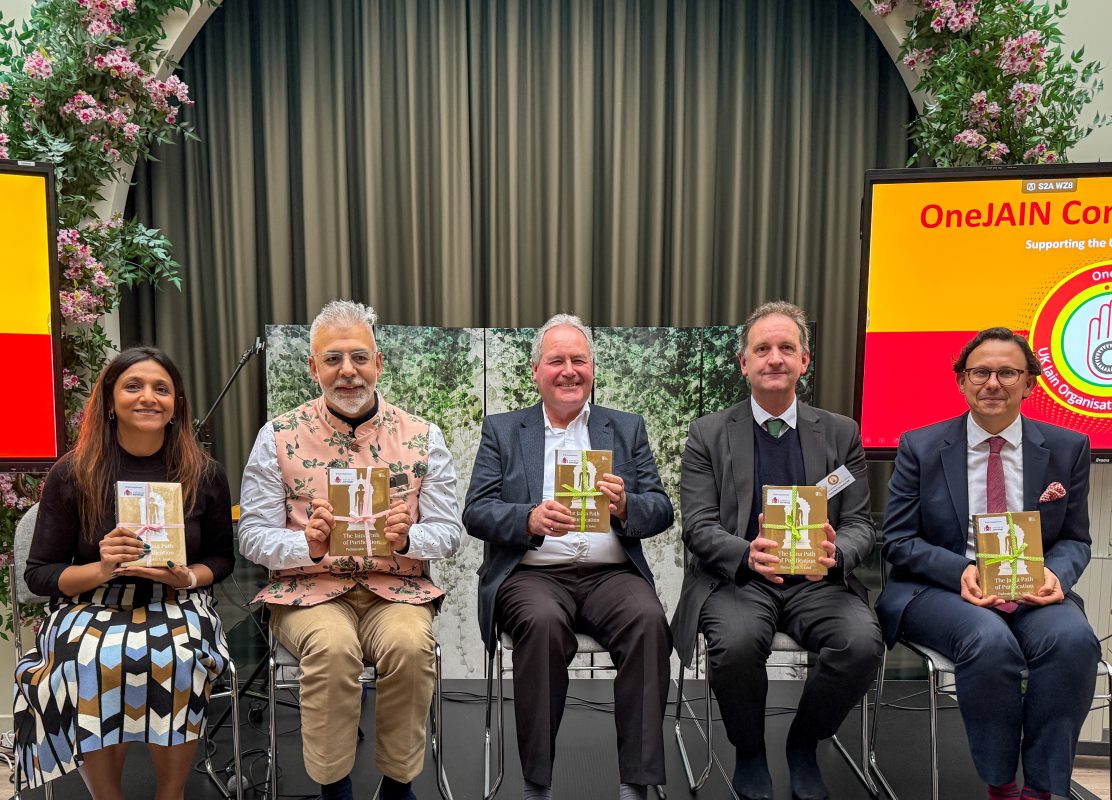
Jain community leaders gather to address governance, safety, public leadership and the future of Jain identity in the UK
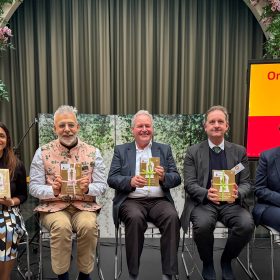
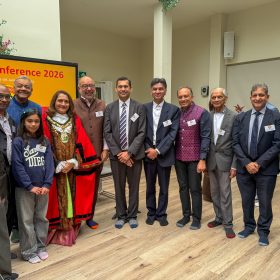
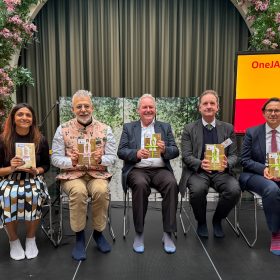
Picture: Baroness Shama Shah, Lord Krish Raval,, Bob Blackman MP, Matt Turmaine MP, Lord Katz
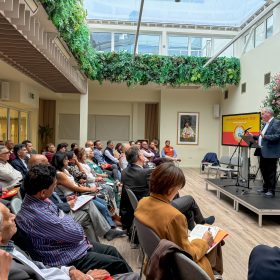
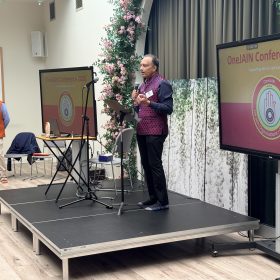
The National OneJAIN Presidents’ Conference 2026, held at Avanti House School in Stanmore on 8 March 2026, brought together leaders from Jain organisations across the United Kingdom for a full day of dialogue, reflection and forward planning. Organised by the Institute of Jainology (IOJ) and the OneJAIN panel, the conference created a forum for community leaders to discuss key issues affecting the Jain community, including governance, community safety, representation in public life and the long-term future of Jain identity in Britain.
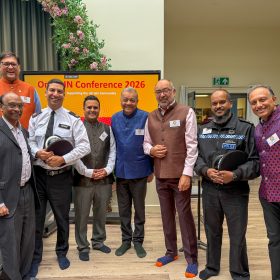
The gathering was attended by the leadership teams of Jain organisations, along with researchers, policymakers, parliamentarians and law-enforcement representatives. Throughout the day, discussions explored how Jain organisations can work collaboratively to address emerging challenges while strengthening the community’s voice within wider British society.
The conference took place in the Mandir space of Avanti House School, a setting that delegates repeatedly remarked provided a calm and reflective atmosphere for the discussions. The day was supported by volunteers from a number of Jain organisations.
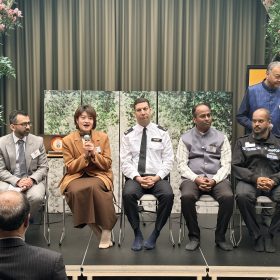
Speakers included: Baroness Shama Shah, Lord Krish Raval, Lord Michael Katz (Labour Faith and Belief Champion), Bob Blackman MP (Deputy Chair, Jain All-Party Parliamentary Group), Matt Turmaine MP (Chair, Jain All-Party Parliamentary Group), Krupesh Hirani AM (London Assembly), Anjana Patel (The Worshipful the Mayor of the London Borough of Harrow), Superintendent Zubin Writer (Metropolitan Police), Inspector Muhammed Islam (Herts Constabulary), Nirmal Shah (Oshwal Association of the UK), Ornicha Daorueng (International Centre for Sustainability), Ashish Channawar (INSIGHT UK), Nilesh Kothari, Sandip Shah (Veerayatan UK), Dr Mehool Sanghrajka, Amit Lathia (Institute of Jainology).
Opening reflections: values, community and collaboration
The conference opened with a welcome from Nilesh Kothari of Veerayatan UK, who greeted delegates from Jain organisations across the country and set out the purpose of the gathering.
He emphasised that the conference was designed not only as a platform for discussion but also as an opportunity for leaders of Jain organisations to collaborate, share experiences and think strategically about the future of the community.
Marking International Women’s Day, which fell on the same day as the conference, Kothari recognised the contributions and achievements of women in the Jain community and in wider public life. He congratulated the many women present in the room who hold leadership positions in community organisations, emphasising the importance of encouraging greater female participation in community leadership and public life.
He also reflected briefly on the teachings of Lord Mahavira, noting that principles such as ahimsa (non-violence), compassion, and respect for different perspectives remain highly relevant in addressing contemporary social challenges.
Following the opening remarks, Sandip from Veerayatan led delegates in a prayer and meditation for world peace. The session included the recitation of the Navkar Mantra, the central Jain prayer which expresses reverence for enlightened beings and the path toward spiritual progress, followed by the Logassa Sutra, which pays homage to the 24 Tirthankaras. The prayer set a reflective tone for the discussions that followed.
Reviewing the work of the Jain community
The first presentation of the conference was delivered by Dr Mehool Sanghrajka, Managing Trustee of the Institute of Jainology.
Dr Sanghrajka began by outlining the role of OneJAIN, which was created to serve as a collaborative platform bringing together Jain organisations across the United Kingdom. The initiative aims to strengthen cooperation between institutions, enabling the community to work collectively on issues such as representation, education, policy engagement and long-term strategic planning.
He explained that a key objective of OneJAIN is to strengthen pride in Jain identity while also helping wider society better understand Jain philosophy and values.
Reflecting on the past year, Dr Sanghrajka highlighted a number of initiatives that have helped raise the visibility of the Jain community.
Among these was the celebration of Mahavir Janma Kalyanak at 10 Downing Street, which represented an important moment of recognition for the Jain community at the highest levels of government. Events were also held in the House of Commons, providing opportunities for members of the Jain community to engage directly with parliamentarians and policymakers.
The Institute of Jainology also continued its interfaith engagement, including maintaining a strong relationship with the Vatican, where shared discussions have focused on themes such as peace, compassion and the sanctity of life.
Academic engagement remains another important element of the organisation’s work. The Institute supports Jain scholars and students participating in international conferences, helping ensure that Jain philosophy and ethics are represented in global academic discussions.
Another initiative highlighted was participation in Diwali celebrations in Trafalgar Square, where Jain organisations were invited to take part in one of London’s largest public cultural celebrations.
Dr Sanghrajka also discussed the Jain Census report, which analysed data relating to the Jain population in the United Kingdom. The report highlighted the importance of accurate demographic data in ensuring that the community receives appropriate recognition and services.
He concluded by outlining two key priorities for the coming years:
- Continuing advocacy for a Jain tick-box in the national census
- Progress on the Wellcome Trust Jain manuscripts project, which aims to support the restitution and academic study of important Jain manuscripts and transform them into educational resources.
Governance and accountability in community organisations
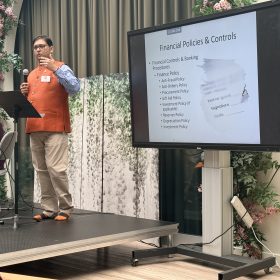
The conference then turned to the topic of charity governance, with a presentation by Nirmal Shah of the Oshwal Association of the UK.
Shah began by explaining that while he has extensive experience working within community organisations, he does not consider himself an expert but rather someone who has learned important lessons through practical experience.
He noted that charities today operate in an environment of increasing scrutiny. Governance failures in some organisations have led regulators and the public to expect greater transparency and accountability.
As a result, community organisations must ensure that they operate according to robust governance standards.
Shah highlighted several policies that charities should have in place, including:
- trustee codes of conduct
- conflict-of-interest policies
- safeguarding procedures
- financial oversight mechanisms
- risk management frameworks
- complaints procedures
He also emphasised the importance of data protection and privacy compliance, noting that the Information Commissioner’s Office has increasingly begun imposing substantial fines for breaches.
For organisations that handle donations and fundraising activities, he stressed the importance of clear fundraising policies and proper record-keeping, including systems for verifying donors and maintaining financial transparency.
A key message from his presentation was that good governance is essential not only for regulatory compliance but also for maintaining the trust and confidence of the community.
Safety and security for Jain communities
One of the most significant sessions of the conference focused on community safety and the issue of anti-Hindu hate incidents in the UK.
Researcher Ornicha Daorueng, Head of the Future of Faith Desk at the International Centre for Sustainability, presented findings from research examining perceptions of anti-Hindu hate in Britain.
She explained that while official statistics suggest relatively low numbers of recorded incidents, there are reasons to believe that many incidents may be under-reported.
One contributing factor is the absence of a dedicated institutional monitoring system similar to those that exist for other communities, such as the Community Security Trust (CST) for Jewish communities or Tell MAMA for Muslim communities.
Without consistent data collection and reporting mechanisms, it becomes difficult for policymakers to recognise the scale of an issue or develop appropriate responses.
To address this challenge, the research team is developing a national reporting portal that will allow members of the community to report incidents directly. The platform will document, analyse and monitor incidents in order to build a clearer picture of trends affecting the community.
Case studies and community resilience
Ashish Channawar of INSIGHT UK then presented case studies illustrating challenges faced by Hindu communities in recent years.
He highlighted several incidents affecting temples and individuals, including attacks on places of worship and assaults on community members.
Channawar emphasised that the United Kingdom is fundamentally a country built on the principles of law, democracy and religious freedom, and that protecting these values requires vigilance and engagement.
He encouraged communities to focus on several key steps:
- reporting incidents rather than ignoring them
- reviewing security arrangements for places of worship
- building awareness within communities about how and why incidents should be reported
- strengthening relationships with law enforcement and local authorities
He also noted that security funding available to places of worship has historically been uneven, and encouraged community organisations to continue advocating for fair access to protective resources.
Building trust between communities and the police
Representatives from law enforcement also addressed the conference.
Superintendent Zubin Writer, who leads several hundred police officers in the London Borough of Harrow, spoke about the importance of maintaining strong relationships between police and the communities they serve.
He acknowledged that hate crimes of all kinds, whether directed at Hindus, Muslims, Jews or other groups, are unacceptable and often stem from ignorance and misunderstanding.
Writer explained that community engagement plays a central role in policing strategy. In Harrow, police regularly meet with faith leaders, attend community events and maintain open channels of communication with community representatives.
These efforts, he noted, have contributed to improvements in local safety outcomes. Over the past fifteen months, Harrow has moved from being ranked the eighth safest borough in London to the third safest.
He encouraged members of the community to contact police directly if they have concerns, emphasising that cooperation between communities and law enforcement is essential to maintaining trust and safety.
The challenge of policing resources
The conference also heard from Krupesh Hirani, London Assembly Member for Brent and Harrow.
Hirani provided insight into the pressures facing the Metropolitan Police, whose budget currently stands at around £5.29 billion, with the majority allocated to staffing costs.
He explained that reductions in funding over the past decade have created significant challenges for policing in London, particularly as demands on the police have increased due to major public events and large-scale protests.
Despite these challenges, he noted that awareness of anti-Hindu hate incidents has begun to increase within political and policy discussions, and that improved reporting mechanisms are helping ensure that the issue receives appropriate attention.
Women in public life
Another highlight of the conference was an address by The Worshipful the Mayor of the London Borough of Harrow Anjana Patel, who spoke about her personal journey into public life.
She described how her motivation for entering politics was rooted in a desire to serve the community and challenge racism and discrimination.
Reflecting on her experiences over more than twenty-five years of public service, she spoke openly about the challenges she faced earlier in life and how she overcame them. She encouraged others not to be discouraged by setbacks, emphasising that perseverance, hard work and a strong spiritual foundation can enable individuals to overcome difficult circumstances.
Her remarks were guided by the words of Pramukh Swami Maharaj, whom she quoted:
“In the joy of others lies our own.”
Faith and leadership in public life
The afternoon session began with a conversation between Lord Krish Raval and Dr Mehool Sanghrajka, exploring the relationship between spirituality and public leadership.
Lord Raval reflected on his own journey into politics and described himself as a lifelong student of faith.
The discussion explored several key Jain philosophical concepts, ranging from the metaphysics of the Soul to the idea that individuals must take responsibility for their own actions and circumstances, and that thoughts, speech and actions all contribute to the creation of karma.
Dr Sanghrajka also explained the Jain concept of anekantavada, the principle that truth can be viewed from multiple perspectives. Lord Raval observed that the ability to disagree respectfully is a cornerstone of democratic society, and suggested that this principle has important implications for public leadership.
Both speakers emphasised that spiritual values can contribute to integrity, humility and compassion in public service.
Representation in Parliament
A major highlight of the conference was an address by Baroness Shama Shah of Wembley, who recently became the first Jain parliamentarian in the House of Lords.
She reflected on the journey that brought her to Parliament, beginning with the sacrifices made by her parents when they first arrived in the UK.
Her career began in education before she later became involved in housing development, where she helped deliver major regeneration projects and investment into communities in Brent.
In December 2025, she was invited by the Prime Minister to join the House of Lords, taking her seat in January 2026.
She explained that she chose the name Shah in recognition of her father and the sacrifices he made to provide opportunities for his children.
Baroness Shah emphasised that her appointment represents not only a personal milestone but also an opportunity to give voice to the Jain community in national life.
Building stronger community representation
The conference also heard from Lord Katz, the Labour Faith and Belief Champion, who spoke about the importance of strong institutions within minority communities.
Drawing on the experience of Jewish communities in the UK, he noted how organisations such as the Community Security Trust have helped develop effective systems for community protection and engagement.
He encouraged the Jain community to continue building strong structures that enable effective representation while also working collaboratively with other communities.
The role of the Jain APPG
Matt Turmaine MP, Chair of the Jain All-Party Parliamentary Group, spoke about the role of the APPG in raising issues affecting the Jain community within Parliament.
He highlighted the importance of continued engagement between community organisations and policymakers, particularly in relation to initiatives such as the campaign for a Jain census tick box and work relating to Jain manuscripts and heritage.
Faith communities and social responsibility
Bob Blackman MP, Deputy Chair of the Jain APPG, spoke about the role that faith communities can play in addressing wider social issues, including drug use, knife crime and youth engagement.
He emphasised that temples and community organisations can play an important role in guiding young people and providing positive alternatives that help prevent involvement in crime.
Understanding the Jain community through census data
Later in the day, Amit Lathia presented findings from the 2021 UK Census relating to the Jain community.
The census recorded approximately 25,000 Jains in the UK, although many believe that the actual number may be significantly higher.
He explained that census data is widely used by governments, local authorities and businesses to make decisions about services and resource allocation.
Without accurate data, communities risk being overlooked in policy planning.
Looking towards the future
The final presentation of the conference returned to Dr Mehool Sanghrajka, who explored the challenges facing the Jain community as it looks toward the 2031 Census and the next generation.
He noted that changing migration patterns, technological advances and evolving social structures have transformed the way communities function.
To remain relevant, Jain organisations may need to focus less on cultural markers and more on the core philosophical values of Jainism, including non-violence, environmental responsibility and respect for different perspectives.
He also emphasised the importance of engaging younger generations through education, university societies and accessible community programmes.
A shared commitment
The conference concluded with thanks to all the speakers, delegates and volunteers who contributed to the event.
The discussions throughout the day demonstrated the strong commitment of Jain organisations to work collaboratively, address emerging challenges and ensure that Jain values continue to make a positive contribution to British society.
As participants reflected on the conversations of the day, there was a shared recognition that the future of the community will depend on strong leadership, effective collaboration and engagement with the next generation.
Download Presentations
Insights Safeguarding Communities Places of Worship
Essential_Policies_for_UK_Registered_Charity_Presentation
Ornicha- Perceptions of Anti-Hindu Hate
OneJAIN Conference 2026