

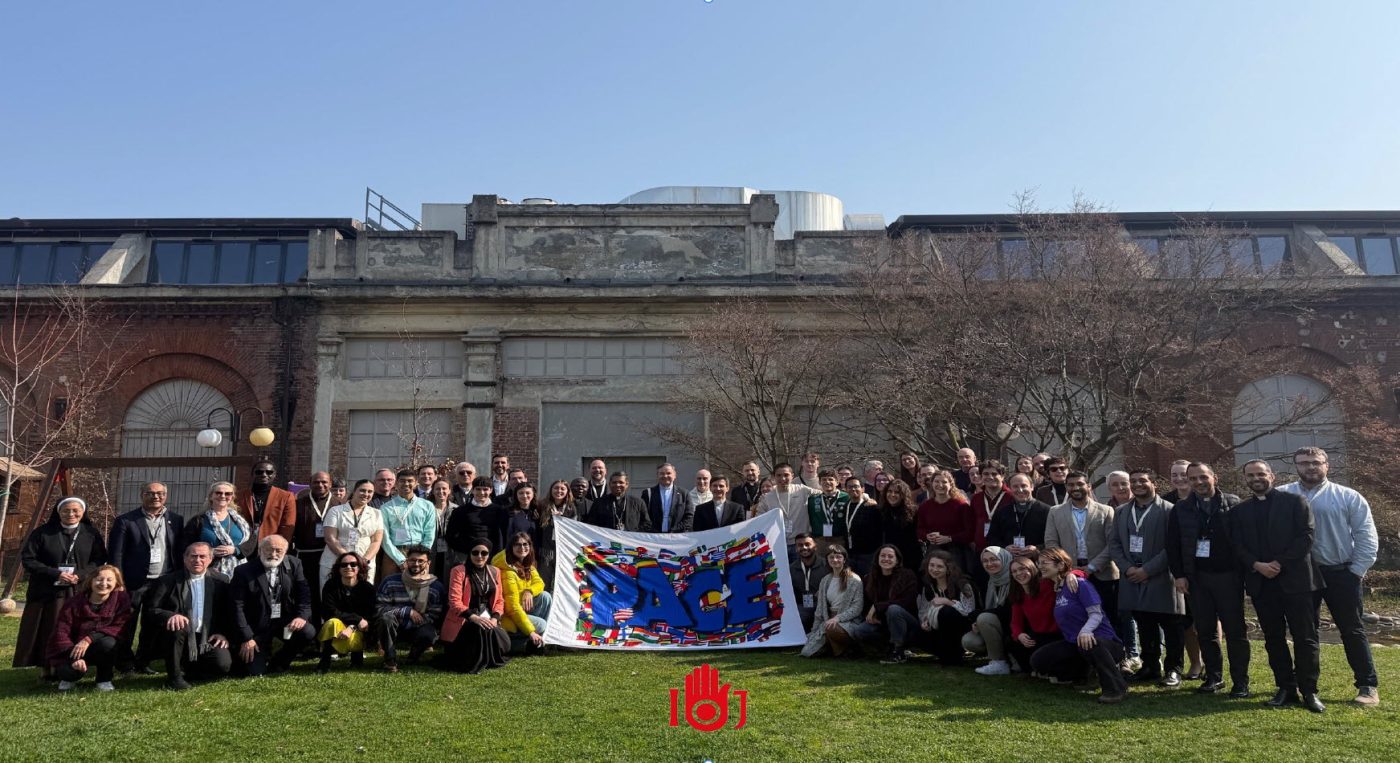
The Institute of Jainology is extremely grateful to have been invited to the Youth in Dialogue Conference, hosted by the Dicastery for Interreligious Dialogue. The conference was hosted at the historic Arsenal of Peace (Arsenale della Pace) in Turin, Italy, from March 6 – 8, 2026. Delegates from around the world were invited to present themselves and share insights into their respective faith traditions, highlighting the importance of youth engagement in interreligious dialogue. The Institute of Jainology, as part of the UK Jain delegation, was represented by Shandip Shah (moderator), Hirak Doshi, Veer Sheth, and Yash Shah (youth delegation). Representatives of varying faith, including Jainism, Judaism, Catholicism, Islam and Buddhism came together from to foster dialogue, understanding, and collaboration.
The 3-day conference featured renowned speakers from around the globe, sharing their own personal experiences and messages on interfaith dialogue and peace. The conference also explored 4 key themes, driven by Pope Leo XIV’s call to youth for World Youth Day. These themes were particularly relevant for modern day: Care for Our Common Home, Unarmed and Disarming Peace, Universal Fraternity, and Political Charity.
On the opening night, they introduced themselves and shared their insights into the principles of Jainism, and their relevance to modern-day events. Their presentations offered an overview of core Jain values such as Ahimsa (non-violence), Anekantavada (the principle of multiple viewpoints), and compassion for all living beings.
Shandip moderated group discussions on ‘Care for Our Common Home’, focusing on identifying and addressing immediate threats to the world. Dialogue ranged from ecological collapse to social media challenges, with effective solutions raised by the youth through interfaith collaboration and dialogue. Delegates participated in interfaith discussion to address key issues within these domains, before presenting their findings at the end of the conference. Hirak, Veer, and Yash were involved in interfaith discussions on Care for Our Common Home, Unarmed and Disarming Peace, and Universal Fraternity, respectively. All three were delegated notetakers within their groups and contributed to presenting the conclusions of their group discussions at the conference’s conclusion.
The “Best Practices” Expo was an excellent opportunity for the Jain delegation to share both personal experience and philosophical insight into the Jain religion and lifestyle. These discussions fostered an enriching environment for international delegates to learn more about Jainism, and more importantly share ties and connections with their own background. Along with the introductory session, the expo allowed participants to begin building relationships across religious and cultural lines, laying the foundation for meaningful conversations throughout the conference.
Hirak also shared a powerful reflection of the Jain perspective on peace, focusing on the importance of finding peace on an individual level. This came as part of a morning meditation summary where each faith shared prayers of peace and tranquility.
The Youth in Dialogue conference served as a vital platform for the Institute of Jainology to share the Jain philosophy on a global scale and participate in interfaith dialogue. The contributions of Shandip Shah, Hirak Doshi, Veer Sheth, and Yash Shah underscored the critical role of Jain youth in global diplomacy. The Institute of Jainology is honored to have contributed to this landmark event, proving that while our faiths may differ, our commitment to a ‘Common Home’ is a shared and sacred duty. We look forward to continuing this journey of universal fraternity.
In appreciation of the efforts of the organisers, the Jain delegates presented a gift to the three key members of the organising team. A gift was also presented to Cardinal George Jacob Kookovad from the Dicastry for Inter-Religious Dialogue of the Vatican.
The Youth in Dialogue Conference played a meaningful role in preparing young people for World Youth Day 2027 by creating a space where youth from diverse cultures, faiths, and backgrounds openly shared ideas, challenges, and hopes for the global Church. Through conversations, workshops, and collaborative initiatives, participants strengthened their sense of unity and responsibility as young leaders, helping to build momentum toward the upcoming gathering and celebrations in Seoul. The conference encouraged active listening, intercultural understanding, and faith-based engagement, all of which were central values of World Youth Day. By fostering dialogue and empowering young voices, the conference helped ensure that the spirit of participation, solidarity, and missionary discipleship will continue to grow as the global youth community prepares to meet in Seoul in 2027.