
IOJ at the Vatican: Jain Voices at the 2025 Conference on Renewing and Re-igniting Hope
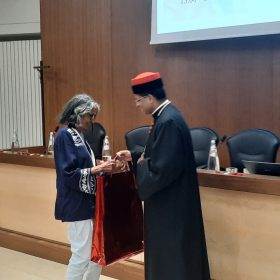
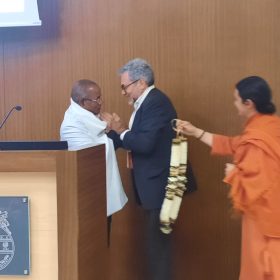
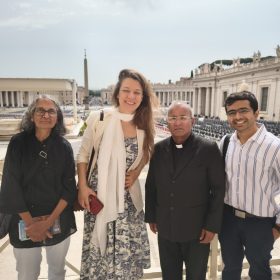
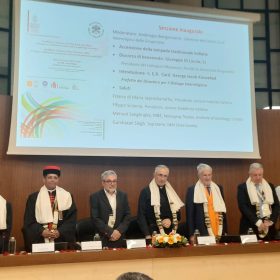
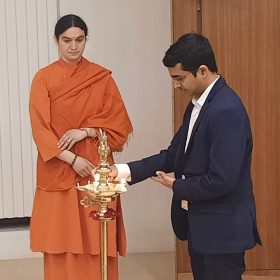
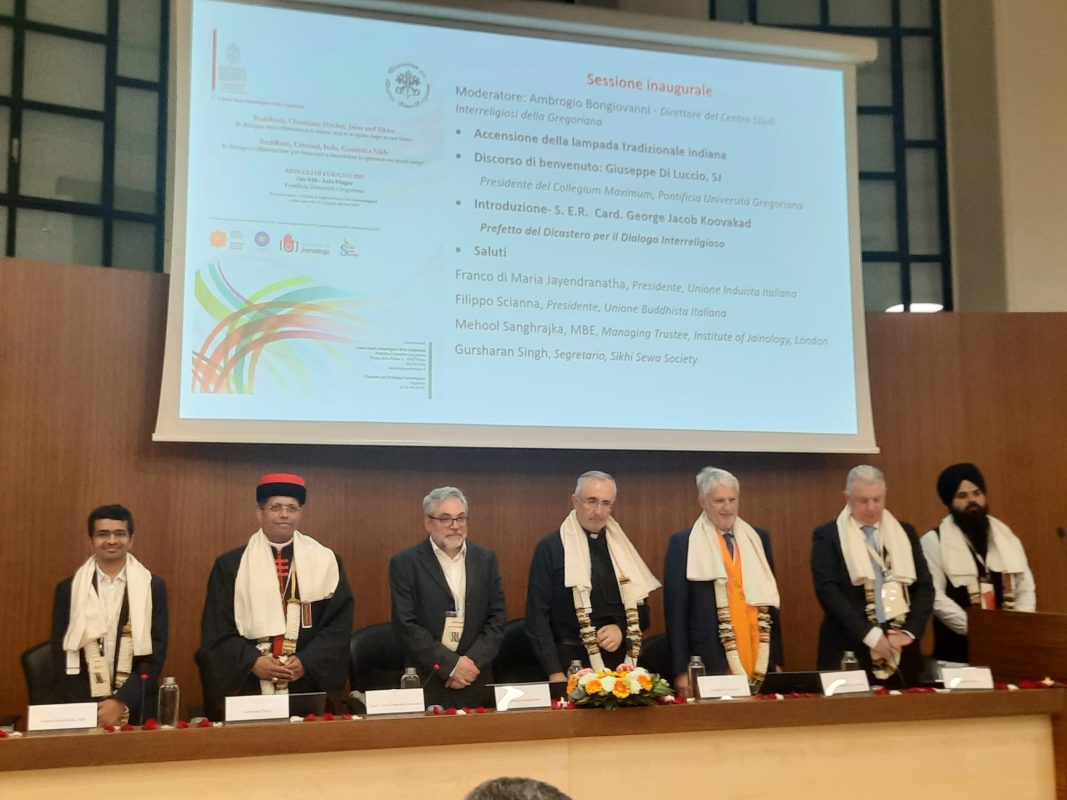
In June 2025, representatives of the Institute of Jainology (IOJ) joined religious leaders, scholars, and delegates from Buddhist, Christian, Hindu, Jain, and Sikh traditions for a major conference hosted by the Dicastery for Interreligious Dialogue at the Vatican. The theme — “In dialogue and collaboration to renew and re-ignite hope in our times” — invited participants to examine how spiritual traditions can guide humanity through an era marked by uncertainty, polarisation, ecological stress, and a widespread sense of disconnection.
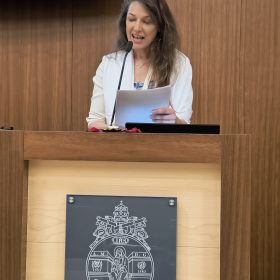
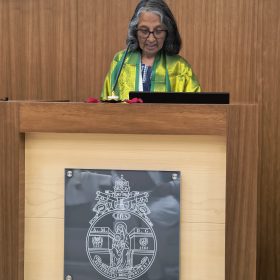
The IOJ was represented by Dr Mehool Sanghrajka, Managing Trustee; Marie-Hélène Gorisse, Dharmanath Assistant Professor in Jain Studies at the University of Birmingham; Dr Jinesh Sheth, Dharmanath Research Fellow in Jain Studies; and Vibhuti Mehta, Coordinator of the IOJ Jain Education Team. Together, they presented a rounded and contemporary view of how Jain thought, ethics, and practice contribute to a deeper understanding of hope — one grounded in self-effort, compassion, responsibility, and a profound respect for all living beings.
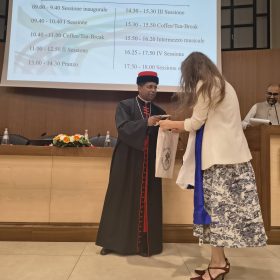
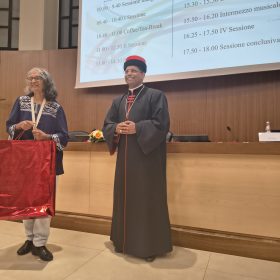
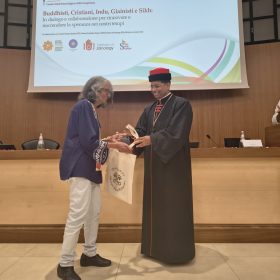
This landmark gathering reflects the close relationship built between the Jain community and the Vatican over many years. It also underlines the IOJ’s longstanding commitment to interfaith dialogue, mutual understanding, and the promotion of universal values rooted in non-violence.
Honouring friendship and deepening ties
Dr Mehool Sanghrajka opened the conference with a warm welcome on behalf of the Jain community. He paid tribute to the late Pope Francis, describing him as a “true friend of the Jain faith” whose ministry saw significant convergence between Jain and Catholic positions on key ethical issues. He also offered congratulations to Pope Leo XIV, expressing hope for even deeper ties in the years ahead.
Dr Sanghrajka emphasised a central Jain conviction: that every living being, from plants and insects to humans, carries a soul capable of liberation. This shared spiritual potential gives rise to a worldview in which all life is sacred. To understand hope from a Jain standpoint, he explained, one must understand karma — the subtle matter shaped by one’s thoughts, words, and actions. A compassionate and disciplined life generates a future oriented towards peace, harmony, and inner clarity.
Invoking Mahatma Gandhi, he reminded delegates that positive change arises from individual agency. Gandhi’s life, he noted, demonstrated how non-violence and moral conviction can move entire nations towards constructive goals. Dr Sanghrajka expressed the wish that the conference would inspire a similar collective movement, rooted in mutual respect and shared purpose.
Hope through Jain philosophy: the purity and potential of every soul
Vibhuti Mehta offered the first thematic exploration of Jain perspectives on hope. She drew attention to the Jain understanding of the soul as inherently pure, with infinite knowledge, perception, energy, and bliss. This purity becomes obscured by karma, yet remains fully recoverable. Hope, therefore, is not wishful thinking but an active conviction that transformation is possible through ethical living.
She outlined the “three jewels” — right faith, right knowledge, and right conduct — as a unified path that nurtures this transformation. These principles anchor Jain life and reveal hope as a discipline rather than an emotion. Her presentation also connected hope to three well-known Jain values:
-
Ahimsa strengthens ecological and ethical responsibility by promoting carefulness towards all life.
-
Anekantavada encourages openness to multiple viewpoints, supporting dialogue in a divided world.
-
Aparigraha teaches restraint in possessions and attachments, freeing individuals from the anxieties created by excess and consumption.
Mehta closed by highlighting the value of interdependence. Every soul, she noted, “renders service to one another”, showing that hope flourishes in cooperation, not isolation. Interfaith collaboration is therefore not merely desirable but essential for the common good.
Hope as self-transformation: insights on practice and daily life
Marie-Hélène Gorisse expanded this discussion by addressing the decline of hope in contemporary society. She argued that religions help restore hope by situating individual lives within a broader and meaningful framework. Jainism, she explained, identifies a natural dissatisfaction in human experience — but views this dissatisfaction as the starting point for spiritual awakening.
Her presentation drew parallels between learning a musical instrument and cultivating the Jain path. Just as a musician requires knowledge, intuition, and constant practice, a Jain aspirant progresses through right faith, knowledge, and conduct. Hope is the quiet certainty that disciplined self-effort will eventually reveal the soul’s true nature.
Gorisse highlighted several practices that support this transformation:
-
Meditative exercises that quieten destructive passions such as anger, pride, deceit, and greed.
-
Contemplations (bhāvanās and anuprekṣās) that refine attitudes towards self, others, and the world.
-
Equanimity (samāyika), which stabilises the mind and nurtures goodwill towards all beings.
-
Repentance (pratikraman), which encourages self-reflection and allows individuals to continue their journeys without losing courage after setbacks.
She emphasised the importance of overcoming passivity, pointing out that modern despair often stems from feeling powerless. Jainism, she said, reminds each person that they are an active agent in their spiritual progress. She also noted that community — including the guidance of monks and nuns — plays a crucial role in sustaining hope.
Bhāvanā and Anekāntavāda: cultivating hope through engagement with others
The final Jain presentation, by Dr Jinesh Sheth, explored two major themes: the four bhāvanās (contemplations) applied in social life, and the Jain doctrine of anekāntavāda.
Dr Sheth described the four bhāvanās as practical tools for relating to others:
-
Kindness (maitrī) towards all beings.
-
Joy (pramoda) at the virtues of others.
-
Compassion (karuṇā) for those who suffer.
-
Equanimity (mādhyastha) towards the arrogant or hostile.
These contemplations, he explained, build a grounded and realistic form of hope — one that neither ignores human differences nor becomes defeated by them. By cultivating these attitudes, individuals create conditions in which hope can become a shared and actionable force.
Anekāntavāda, the doctrine of non-one-sidedness, offers a complementary insight. It teaches that truth is multifaceted. This perspective allows individuals to recognise that difficult circumstances never constitute the whole picture. By opening intellectual space for multiple viewpoints, anekāntavāda strengthens resilience and reduces despair.
A shared commitment to the common good
Across all contributions, a coherent message emerged: Jainism offers a deeply rooted and practical approach to hope — one grounded in self-effort, ethical clarity, respect for all life, and a willingness to see complexity with humility.
The IOJ’s participation at the Vatican reflected not only a meeting of traditions but also a shared recognition that the world’s spiritual communities have a crucial role in addressing today’s challenges. Hope, the speakers agreed, cannot remain abstract. It must translate into compassion, dialogue, responsibility, and everyday choices that nurture peace and possibility.
This conference stands as another significant moment in the long and warm relationship between the Jain community and the Vatican. The IOJ looks forward to continuing this collaboration — strengthening understanding, promoting non-violence, and contributing to a more hopeful and harmonious future for all.
Download Documents:
Vatican Conference Welcome Address June 2025
Building Hope as a Contribution to Common Good
Renewing and Re-igniting Hope in our Times and the Role of Religions, Religious Leaders
The Understanding of Hope – The Jain Perspective