

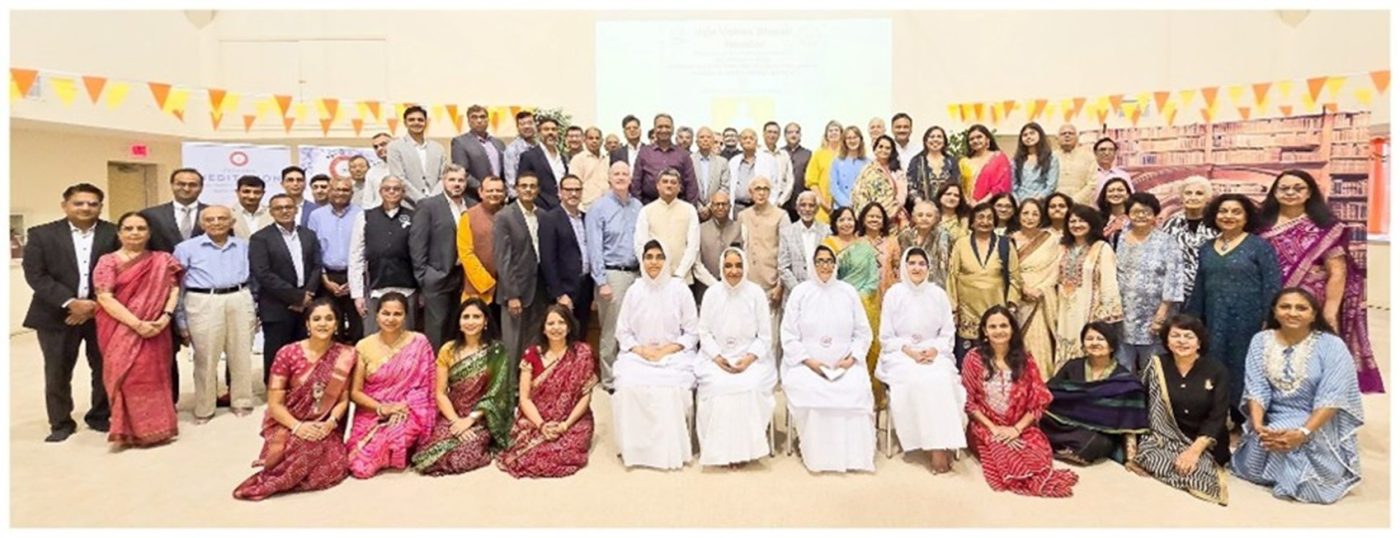
The year 2025 marks a significant moment in the global development of Jain Studies. Across several continents, universities and research institutions have expanded their commitment to the academic study of Jain philosophy, history, languages, and culture. What was once a small and specialised area within Indology and religious studies has now become a recognised and steadily growing field within the humanities.
This progress reflects decades of sustained effort by scholars, donors, and community organisations who have worked to establish Jain Studies within mainstream academic life. The results are now visible in new academic posts, research centres, doctoral programmes, conferences, and major publications.
Expanding Academic Presence
Over the past year, a number of universities in the United States, the United Kingdom, continental Europe, India, and Latin America have launched or expanded initiatives in Jain Studies. These include new endowed chairs and professorships, funded PhD and postdoctoral positions, and long-term research programmes.
Institutions such as Oxford University, SOAS – University of London, and the University of Birmingham have strengthened their engagement through doctoral and research appointments. In Europe, Ghent University has emerged as one of the largest and most active centres for Jain Studies globally. In the United States, new endowments and teaching posts have been created at several leading universities, including the University of Texas at Austin, Rice University, and Florida International University.
In India, the International School for Jain Studies (ISJS) in Pune has continued to expand its faculty and research output, while also strengthening academic exchange with universities abroad. Its work in Prakrit studies and Jain philosophy has become an important reference point for scholars worldwide.
Scholarship and Research Growth
An encouraging development is the growing number of doctoral students choosing to specialise in Jain Studies. Nearly fifty scholars are currently pursuing PhDs in the field, with a noticeable increase in younger researchers entering academic careers. This represents an important step towards building long-term scholarly capacity.
International conferences held in the UK, the USA, and Europe have provided platforms for presenting new research and strengthening collaboration between scholars. Jain Studies has also gained wider visibility through academic contributions at international forums, including events linked to the United Nations.
Several major academic books published or scheduled for release in 2025 address areas such as Jain philosophy, logic, mathematics, astronomy, archaeology, history, and Anekāntavāda. These publications are helping to place Jain intellectual traditions more firmly within global academic discourse.
Building Institutions and Infrastructure
Jain Studies is now taught or researched at nearly fifty-five universities across more than a dozen countries. This growth is supported by a substantial academic infrastructure, including:
-
Multiple endowed chairs and professorships
-
Funded postdoctoral fellowships
-
The world’s first academic chair in Jain archaeology
-
New research centres and teaching programmes
-
Online and campus-based degree pathways, including accredited master’s programmes
These developments show that Jain Studies is no longer dependent on short-term or isolated initiatives, but is becoming embedded within established academic institutions.
A Collective Effort
One striking feature of this growth is the collective and values-led approach taken by Jain donors and supporters. Large-scale funding has been pledged in support of academic posts and research programmes, often dedicated in the names of the Tīrthaṅkars rather than individuals. This reflects a strong alignment between Jain ethical principles and the way these academic projects are being supported.
At the Institute of Jainology, we recognise this moment as both a milestone and a responsibility. The expansion of Jain Studies brings with it the need for academic rigour, openness, and sustained institutional support. It also calls for continued collaboration between scholars, universities, and community organisations.
Looking Ahead
From a position of relative obscurity just two decades ago, Jain Studies has now become one of the fastest-growing specialist areas within religious and philosophical studies. Its emphasis on non-violence, pluralism, ethical reasoning, and intellectual discipline speaks directly to many of the moral and social challenges of the modern world.
The Institute of Jainology remains committed to supporting high-quality research, teaching, and public engagement in Jain Studies. We look forward to working with academic partners across the world to ensure that this momentum continues in a thoughtful, inclusive, and scholarly manner.
2025 may be remembered as a turning point. What follows will depend on how well the academic community, institutions, and supporters build on the foundations now in place.
Download Original Press Release from Sukekh C.Jain